Europe is at a crossroads: how can we produce batteries locally and sustainably, but in a way that’s also cost-efficient? Find out why gradual scale-up, solid-state innovations and direct recycling are becoming essential to making a difference.
The second ‘valley of death’ in scale-up: lessons from Northvolt
For hardware companies such as battery manufacturers, the road to successful commercialisation is bumpier than for software companies. They have to come through not one, but two ‘valleys of death’. The second of these, ‘going giga’, is the difficult transition from pilot to large-scale production. A well-known example of this is Northvolt.
Northvolt is a Swedish manufacturer of lithium-ion batteries, founded in 2016 with the ambition of making Europe less dependent on Asian battery manufacturers. The company raised billions of euros and built large-scale factories in Sweden, Germany and elsewhere.
But things went wrong: Northvolt started scaling up too quickly, before all its quality and operational issues had been resolved. As a result, existing inefficiencies were simply multiplied rather than eliminated.
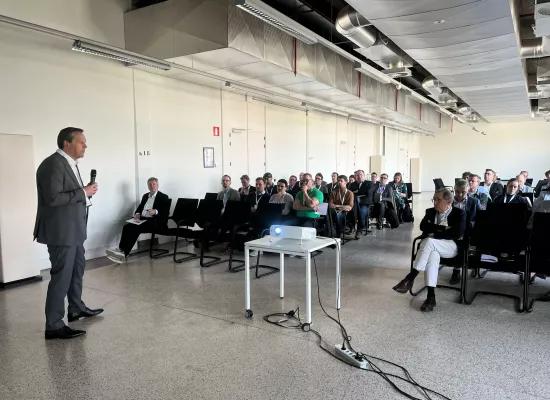
Frank Gielen therefore stressed the importance of gradual scale-up at a recent session. He argued that Northvolt lacked both enough technical experts and sufficient control over its machinery parameters, resulting in years of suboptimal production.
'We can raise a factory’s battery yield to 96% in just four months.
Northvolt took four years and only achieved 70%.'
– Chinese executive from CATL
The hard lesson here is that if you aspire to sustainable battery production you need to invest in both quality and incremental growth.
Cost-efficient battery production outside China? It can be done!
During an LDES workshop last year, Eos Energy Enterprises demonstrated that local battery production is not just possible, but can even be excellent. A year after their presentation, they are delivering impressive results:
- Cycle time: 9.9 seconds
- Yield: 98%
- Technological improvements: better battery performance
- Local content: an impressive 90%
Thanks to support from the US Department of Energy (DOE) and the Inflation Reduction Act (IRA) programme, their case shows that competitive production outside China is feasible. This clearly gives a boost to European battery ambitions.
Solid-state batteries (SSBs): the game-changer in the making
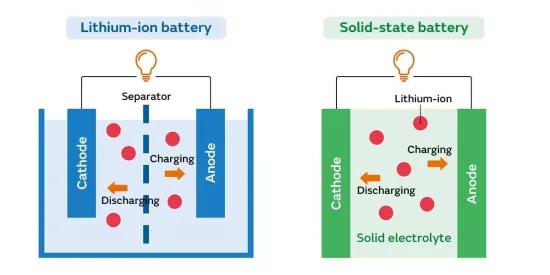
Solid-state batteries promise revolutionary energy densities of 300-500 Wh/kg – almost twice that of conventional lithium-ion batteries. They open the way to new applications such as electric aviation, but also bring fresh challenges:
- Weight reduction: essential to making the widespread use of SSBs possible.
- Lifespan extension: necessary for commercial adoption.
Within Belgium, researchers are working actively on solutions. Hasselt University is focusing on bi-layer designs to extend lifespan, while VITO is conducting research together with partners into 3D printing technologies to increase cell stability.
Direct recycling: a step forward in circularity for Europe
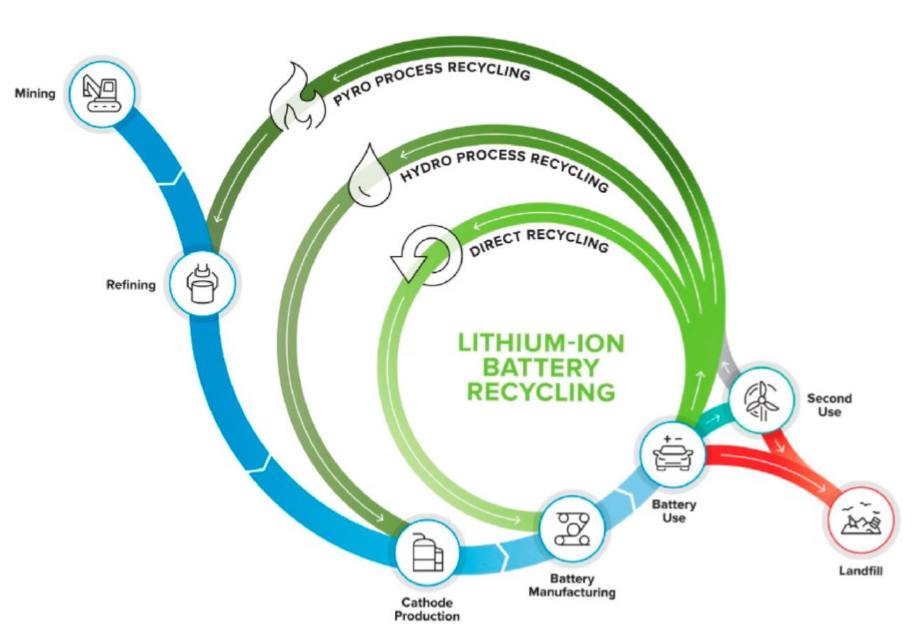
Direct recycling offers a revolutionary approach in the battery sector. Instead of batteries being completely broken down, electrodes are directly reused in new cells – with minimal processing.
Main benefits:
- Faster and cheaper recycling process
- Limited environmental impact
- Retention of critical materials
The biggest challenge is achieving the clean separation of anode and cathode material. At R&D scale, projects are already showing promising results, so the focus is now shifting to the development of large-scale, cost-efficient recycling processes, including in-line quality control of materials.
What do the experts from the round table sessions say?
Several clear key points emerged from the extensive round table discussions:
- Sustainable production as a competitive advantage
Europe can strengthen its position by focusing on safety and sustainability as differentiating factors, as reliable, eco-friendly batteries will become increasingly important in the market. - Innovation in system design
Smart system innovations, such as composites or aluminium as alternative packaging materials, can drastically improve the fire resistance of battery systems. - Striking a balance between performance and circularity
As much attention should be paid to Design 4 Re-X (re-use, recycling, repurpose) as to Design 4 Performance. While China has focused mainly on performance for years, a more prominent role is now being given to circularity in Europe. This is essential, especially in light of European regulations.
'Did you know that the EU expects 65% of the lithium from batteries to be recovered by the end of 2025? That provides extra motivation for committing fully to local and direct recycling.'
Solid-state batteries will in fact require even higher quantities of lithium than traditional batteries, which is why early investment in recycling processes is becoming strategically important.
From research to practice: pilot lines make the difference
Research alone will get us nowhere: Europe needs to bring technology to the market faster. This starts with closing gaps in the value chain and collaborating in networks such as Batt4EU.
In addition, local pilot lines and test centres are crucial. Companies can test and validate new technologies faster in low-regulation zones, lowering costs and increasing the pace of innovation.
Smart financing helps: innovative purchasing programmes, revolving funds and public-private partnerships make technology ready for the market more quickly.
Interested in more insights into the future of energy?
Make a note of these events in your diary:
Energy Trading & Energy Flexibility for Industry
???? 10 June 2025 | ???? 12.00-18.00 | ???? Thor Park
Energy Mission 2025
???? 21 October 2025 | ???? Thor Park
Emerging Energy Transition Technologies
???? 19 November 2025 | ???? Location to be determined
Stay informed and power the future together with us!