Change approach or stand still?
Growing tensions between major powers, a looming trade war, cyber attacks on critical infrastructure... The international context is more turbulent than ever. Despite this, Belgian industry experts are remarkably upbeat: ‘Now is the time to invest, innovate and grow.’ Why and how? Find out at the annual event 'Securing Tomorrow. Now’ organised by Agoria and Sirris.
Don’t be fatalistic: seize opportunities! This is what Agoria and Sirris are recommending. How? By bringing together a number of leading experts in the Skyhall of Brussels Airport for their annual event on 4 June. These experts will provide answers to what are burning questions for technology businesses right now. Is our physical security at risk? Is a global trade war coming? Do we need to adjust our long-term strategy? And what should we do in the short term?
In this interview, two experts answer the first questions: Kevin Verbelen, Senior Expert International Trade & Company Lawyer at Agoria, and Benjamin Denayer, Manager Corporate Development at Sirris.
The geopolitical tipping point is also an opportunity
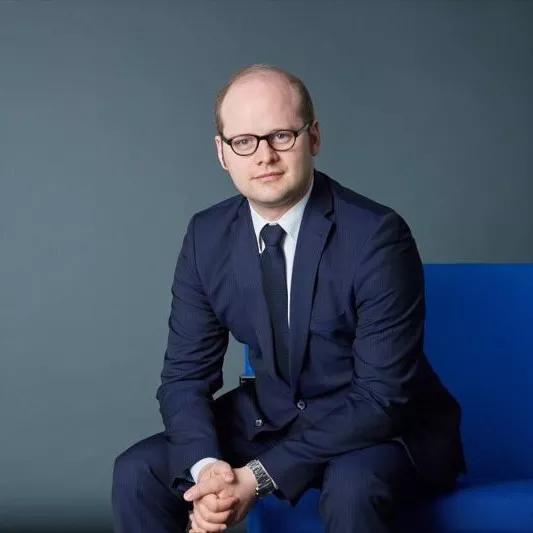
The geopolitical uncertainty is real and tangible. ‘There’s been quite a commotion in recent months,’ says Kevin Verbelen. ‘Trump’s tariffs, Chinese export restrictions on raw materials, uncertainty about US military guarantees, you name it. Businesses initially respond to uncertainties by postponing investments. A different approach is possible, though, because opportunities have arisen. This is what I’m hearing from CEOs of industrial companies.’
According to Verbelen, the main challenge now is to take the right action, at both European and national level. ‘If the EU is able to present itself as a stable region and lighten the administrative burden for companies, we’ll emerge in a stronger position. Trade agreements in South America and Asia as well as partnerships with countries such as Japan or Korea and energy agreements with Africa and the Arabian Peninsula are within reach.’
Benjamin Denayer adds: ‘We need to realise that security today has three dimensions: physical security, hybrid warfare such as cyber attacks and economic warfare. These three elements directly affect the business world, and we’ll be covering them during the annual event.’
Make existing products defence-proof
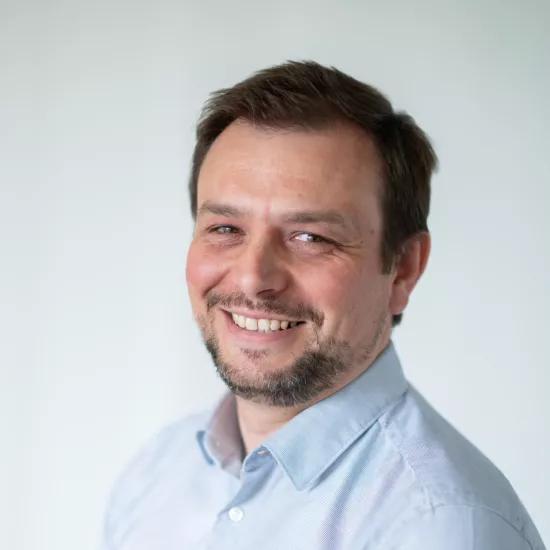
What technology companies can expect is not just risk, but also growth. ‘The number of businesses becoming members of Belgian Security & Defence Industry (BSDI) has doubled in two years,’ says Denayer.
‘We’re seeing start-ups and established companies developing new products, adapting existing technology and setting up alternative supply chains. There’s a huge opportunity here.
Siris supports companies with technology roadmapping and advice. ‘We help companies to make new or existing products for defence applications. This goes much further than purely military products: it’s about economic resilience, digital security and infrastructure protection.’
Verbelen emphasises that Europe is ready to invest in this: ‘With the DIRS (Defence, Industry and Research Strategy) plan and 800 billion euros at European level for defence and resilience, the funding is there. But companies need to be ready to reflect, build and deliver.’
Find tangible answers at Tech Fair
The annual event ‘Securing Tomorrow. Now’ responds to the complexity of the current situation with concrete insights, tools and business case studies.
‘We’ll take a closer look at what critical infrastructure is, how to protect your business against cyber threats, where to find alternative supply chains and how to respond to European support measures,’ says Verbelen. ‘We certainly don’t have a crystal ball, but you can expect tangible answers.’
Denayer adds: ‘At the Tech Fair you’ll encounter dozens of examples of companies that are focusing on resilience and growth. Inspiring cases such as Skeydrone, instance, which secures the airspace above critical zones. Or Marlink, which monitors underwater activities around offshore wind farms. They show that Europe and its businesses have the future in their own hands.’