How to untangle the logistics of hire, share and repair
Round-trip logistics as a catalyst for scalable circular models
Anyone who adopts a circular model like hire, share or repair will sooner or later face the same challenge: round-trip logistics. Products are sent to the user, returned, inspected, repaired if necessary, and then used again.
It is this constant movement that makes circular models valuable, but it also makes them complex. However, it is where the greatest opportunity lies. A fresh look at how, what and why you organise transport can help you to make your operations more efficient, scalable and attractive.
The themes below are not ready-made solutions, but ways of thinking and building blocks to help you to look at your logistics puzzle from a different angle.
1. Temporary storage and accessibility as a logistical buffer
A powerful way to reduce complexity is to disconnect times, places and actors.
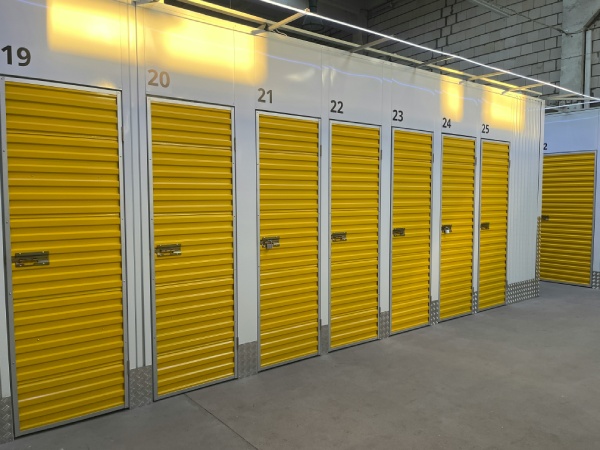
Using a network of local temporary storage points, such as lockers, collection points or locations with extended opening hours, can give you flexibility. Products no longer need to be handed over at the same time and in the same place. This eases the pressure on your schedule, cuts transport costs and improves reliability.
Decentralised infrastructure can take various forms:
- Unstaffed and accessible 24/7 (e.g. public lockers)
- Monitored (e.g. lockers in a building or lobby)
- Staffed (e.g. via a shop, reception desk or service point)
The greatest potential lies in sharing this network among multiple players. When hirers, sharers and repairers use the same local hubs, this creates a fine-meshed system that you can scale up without high levels of investment.
Temporary storage then becomes a strategic lever (rather than an extra step) to make logistics simpler and more customer-focused.
2. What actually moves in round-trip logistics? The product, the repairer or both?
In many models, it is automatically assumed that the product moves. However, that is just one option.
You can also reverse the process and bring the repairer or service provider to the product. Or opt for a hybrid model, in which some interventions are carried out locally and others centrally.
The question is then: Logically, what should move and what should not?
Here are some clear guidelines to help you get started:
- Large, high-volume flows are well suited to centralisation and batching
- Vulnerable or urgent repairs require local intervention
- Mobile solutions are possible for common problems
- Ideally you should organise complex repairs centrally
In practice, hybrid models are becoming increasingly popular. Cleaning and inspections are carried out locally at intermediate storage points, whilst more complex tasks, such as repairs, are carried out centrally.
This is not a binary choice, but a design decision that helps determine how efficient and scalable your model will be. By making informed choices, you can reduce transport costs, shorten lead times and improve the customer experience.

3. Making the most of existing flows
The greatest opportunities in round-trip logistics are not from new flows, but from using the existing movements in smarter ways, as the low barrier to entry often makes this the quickest route to making an impact.
These days many transport operations are well organised but underutilised. Vehicles make journeys but not at full capacity, return journeys are not combined often enough, and even in passenger transport, goods capacity often remains unused.
This presents immediate opportunities:
- Taking goods along with existing journeys
- Linking return flows to deliveries
- Sharing transport between different players
However, this only works if there is sufficient volume, diversity and frequency across multiple actors. In this context, matchmaking and orchestration are essential aspects. A system that brings together and optimises the supply and demand of transport flows:
- Enables effective organisation of grouping and pooling
- Reduces costs without adding complexity
- Creates economies of scale
4. Central or local organisation?
Every organisation makes explicit or implicit choices about centralisation and decentralisation. This is a particularly crucial consideration for round-trip logistics.
The key question, then, is: what do you organise centrally and what do you organise closer to the user?
A centralised organisation offers economies of scale and control. You will build up expertise – for example, in complex repairs – and work with clear standards.
A local approach takes a different strategy. You get more speed and flexibility, which often translates into a better user experience and lower transport costs.
The greatest added value rarely comes from the choice of a single model, but from combining and coordinating.
Possible combinations are:
- Local collection and temporary storage
- Consolidated transport to the central processing facility
- Local interventions when a fast service is essential
These are not merely operational decisions; they also help determine your cost structure, your customers’ experience and the scalability of your model. Anyone who consciously designs this balance is building a robust and forward-looking system.

5. Digital and organisational support as the driving force behind round-trip logistics
Behind every high-performing system for round-trip logistics there is a layer of coordination, data and agreement. Particularly when multiple parties are working together, shared mechanisms are needed.
Key components are:
- Status tracking and traceability for products
- Matchmaking between supply and demand (transport, storage, availability)
- Standard digital interfaces between systems (APIs)
- Clear agreements regarding liability, insurance and guarantee schemes
Equally important is the organisation behind this. As soon as several players start working together, there is a need for:
- Clear rules
- Transparent allocation of costs and benefits
- Trust between parties
This is where the role of a neutral orchestrator comes in: a party or structure that facilitates cooperation without competing, and ensures that all stakeholders retain their positions.
Conclusion: collaboration as the key to scale
You are not the only one untangling the logistics of hire, share and repair. The real breakthrough comes from collaboration: sharing infrastructure, flows and data.
That collaboration only works, however, if it is well organised: secure and transparent, with clear agreements and supported by a neutral, reliable orchestrator.
That is the place of both challenge and opportunity right now. Within the Living Lab on “Speeding up hire, share and repair”, we are actively working on this, drawing on real-world examples.
Discover how the Remanumaat project strengthens circular logistics
Do you want to better manage the logistical complexity of hire, share and repair? In the Remanumaat project, we explore how collaboration, shared infrastructure and smart organisational models can make circular models scalable. Together with companies, we test concrete solutions for efficient return flows, repair processes and coordination between partners.
Do you have a case or challenge relating to round-trip logistics?
We would be happy to work with you to explore how you can strengthen your circular logistics.
Funded by

Partners