

RecyAge | Accelerated Testing and Modelling of Recycled Material Ageing

Towards the reliable use of recycled materials in industry
In response to environmental concerns, increasing use is being made of recycled plastics in many industrial sectors, such as consumer electronics, household appliances, IT and automotive. However, the variability of recyclate batches and the lack of data on long-term performance still hinder the widespread adoption of these materials. The RecyAge project aims to overcome these obstacles by developing a hyper-accelerated ageing test methodology.
Context
Different batches of recycled polymer can exhibit significant variations in properties such as viscosity, the presence of contaminants, degradation or discolouration. These differences make it harder to produce consistent materials – yet this is essential for the reliability of the final parts. Furthermore, the effects of ageing in real-world conditions (UV resistance, mechanical and chemical strength, long-term stability) are still poorly documented. The RecyAge project aims to address these gaps with a structured approach to accelerated testing and modelling, in order to promote the widespread and sustainable adoption of recycled materials in industry.
Objectives & results
The project’s main objective is to develop a hyper-accelerated test method for evaluating the long-term performance of recycled plastics quickly and reliably. Several key steps are planned with this in mind:
- Identifying representative use cases in order to select suitable recycled resins and stabilisers.
- Developing a melt-state formulation and producing ready-to-use granules.
- Creating standardised samples for testing.
- Describing initial properties and long-term behaviour on the basis of specific accelerated tests.
- Analysing the results in order to develop a hyper-accelerated ageing methodology and build reliable predictive models.
Expected deliverables:
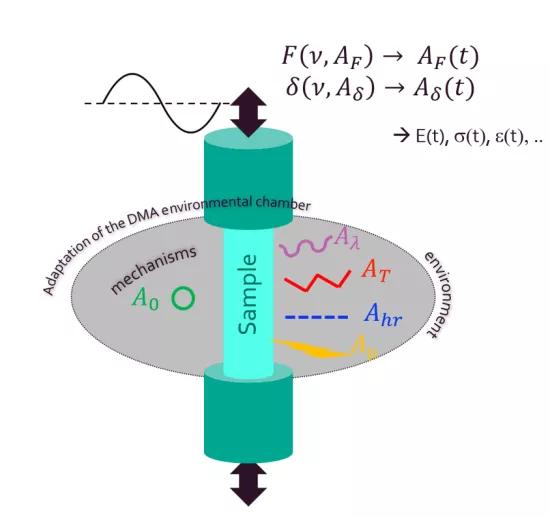
- An innovative methodology based on dynamic mechanical analysis (DMA).
- Models correlating hyper-accelerated tests with conventional tests (QUVA, QUVB, etc.).
- Guidelines on integrating recycled materials into new industrial applications.
Approach
The project has been broken down into the following work packages:
- WP1 – Project management
Overall coordination, technical and administrative monitoring. - WP2 – Formulation of recycled materials
Selecting resins and additives, melt-state formulation. - WP3 – Creating and ageing
Processing granules, accelerated ageing tests. - WP4 – Hyper-accelerated testing
Developing the DMA method and controlling for critical factors (UV, temperature, humidity). - WP5 – Modelling
Introducing models validating the correlation between hyper-accelerated and accelerated tests. - WP6 – Validation and application
Validation in a case study and drafting recommendations for SMEs.
Target group
The project is primarily intended for:
- Plastic material processors: injection moulding, extrusion, compression moulding.
- SMEs that are keen to incorporate recycled materials.
Funding
- Funding agency: SPW Recherche (Wallonia)
- Type of projet: Win4Collective
- Total budget: €642,545, including €239,157 funded by SPW Recherche.
External links
Industrial Users Committee members (Wallonia): Ampacet, Groupe comet, Lavergne, Avient, http Europe, Varina, Castel Engineering, Polymar, Eloy, Biocidal, Plastiwin
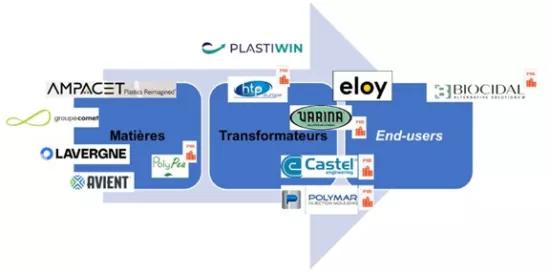
Distribution of user committee members by role in the value chain
Partners

Our experts

Do you have a question?
Send it to innovation@sirris.be