

VerAdMa | Glassware made by additive manufacturing
Expanding glass design possibilities with additive manufacturing
Producing complex glass shapes remains a major challenge for the industry. While additive manufacturing (AM) has transformed the design and production of parts across many materials, its application to glass is still limited. The VerAdMa project aims to unlock the full potential of additive manufacturing for glass by bringing together key players from the Interreg France-Wallonie-Vlaanderen (FWVL) region. Together, they are exploring and developing advanced manufacturing routes for decorative and technical glass.
Target group
The project is primarily relevant for:
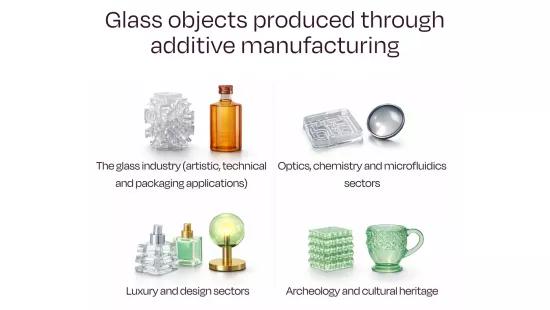
- The glass industry (artistic, technical, packaging)
- Optics, chemistry, and microfluidics
- Luxury and design sectors
- Archaeology and cultural heritage
Context
The Interreg France-Wallonie-Vlaanderen (FWVL) zone is historically rooted in glassmaking, with a dense network of manufacturers and processors shaping the local economy for over a century. However, to remain competitive, the sector must adopt modern manufacturing methods, including additive manufacturing.
While additive manufacturing has made strides in metals, ceramics and polymers, its application to glass remains limited. Meanwhile, universities and research centres in the region are actively exploring additive manufacturing technologies. VerAdMa builds on this ecosystem to pioneer additive manufacturing routes for glass in both artistic and technical applications.
Objectives & results
The goal of VerAdMa is to bring together research centres and manufacturers across the FWVL Interreg zone to develop innovative additive manufacturing techniques tailored to glass.
By doing so, the project aims to enable the production of:
- Decorative glass pieces, particularly for luxury packaging and design
- Technical glass components for optics, chemistry and pharmaceutical applications
Approach
In VerAdMa, additive manufacturing will be used both to produce the moulds and to shape the glass parts themselves. The project explores two complementary additive manufacturing approaches for glass: melting and sintering.
The melting pathway includes two techniques:
- Casting molten glass into 3D-printed refractory moulds using Binder Jetting
- Fusing glass microbeads layer by layer using Powder Bed Fusion
The sintering pathway involves two strategies:
- Injection of glass suspension precursors into 3D-printed moulds
- Direct shaping of glass suspensions through stereolithography
Each technique leverages the consortium’s strong expertise in glass science, formulation, and process engineering. The selected methods are based on technologies with a maturity level of TRL 3–5 and are enabled by the close collaboration between the project’s core and associated partners, including industrial and cultural stakeholders, who will help maximise the project’s impact through targeted dissemination in key sectors.
Are you active in the glass sector and curious about the potential of additive manufacturing?
Contact our expert Guido Heunen to explore collaboration opportunities and tailored guidance.
Funding
- Funding agency: Interreg
- Project type: Interreg - FWVL
- Contract number: 0100095
- Funding level: 60% Feder, 20% Région Wallonne
External links
- Research partners: INISMa, UMons, Sirris, ULille, Platinium 3D
- Associate partners (not funded): MusVerre de Sars-Poteries, Musée du Verre (Charleroi), Pôle MecaTech, EuraMaterials, InDufed
- Official website page of the VerAdMa project on the Interreg website
Partners





More information about our expertise
Our experts

Do you have a question?
Send it to innovation@sirris.be