Koen Boncquet (Product Manager at HubSpot) scrutinises the AI bubble and defines the SuperPM
AI seems to be taking over everything. But is it? According to Koen Boncquet (HubSpot), the Product Manager is still indispensable, although the role is changing faster than ever. At Product Day 2025, he gave a fascinating keynote about the AI hype and its real impact on the work of Product Managers. His conclusion: technology is changing fast, but the real difference is still made by people. Although Product Managers should ideally possess a combination of product intuition, domain knowledge and shrewd judgement.
AI bubble: what Product Managers need to know
Varying rates of AI adoption
While AI isn’t a hype, there is a bubble effect at play, according to Koen Boncquet. Huge investments are being made in AI technologies, but only a limited number of applications have a clear and proven revenue model. ChatGPT is an exception, with 800 million weekly active users and revenue approaching $20 billion. The same isn’t true of every tool, though.
Many companies are joining the AI race based on the assumption that all AI innovation will break through at the same rate.
Koen qualifies this: ‘The idea that everything is changing at the same time is incorrect. Some innovations are taking place incredibly fast, but integration in business processes is often slow, infrastructure costs are still sky-high, and there’s a lack of product-market fit.’
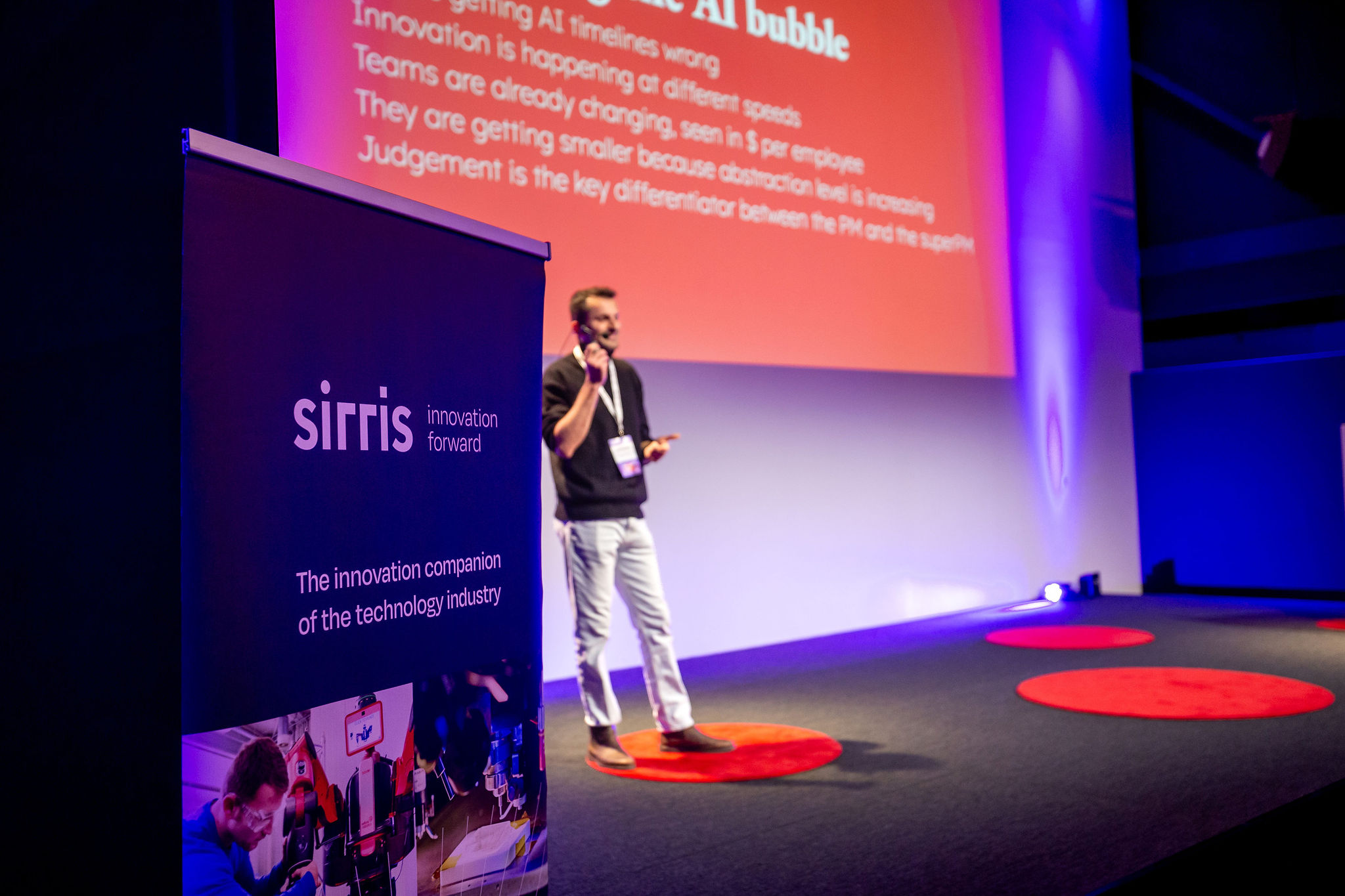
AI slop: rapid output without substance
Koen Boncquet sees another phenomenon emerging: AI slop. ‘More output doesn’t automatically mean better outcomes. You get quick mock-ups or documents that look professional, but contribute nothing strategically. Just like with social media, actually.’
The volume increases, but quality remains dependent on the PM’s insight.
From prototype to product: AI is not the end point
Another point to which he draws attention is the tendency to see AI as an end in itself.
‘Creating a prototype is easy these days, but writing production-ready code is still something only humans can do.’
The difference between a good prototype and a scalable product remains vast. AI helps, but it’s no replacement for the work of an expert. Tools help to come up with a concept more quickly, but the real impact is only generated at the fine-tuning, integration and scaling phases.
So what does AI mean for Product Managers’ work?
Product Management has been evolving for some time, but AI is accelerating that change. Tools like ChatGPT, Copilot and Lovable enable documentation, research, idea generation and prototyping to be developed largely through prompts.
According to Koen Boncquet, this is giving rise to a new profile: the SuperPM.
SuperPMs combine prompting, AI tooling and cross-functional skills. Their role is shifting towards orchestrating tools in order to accelerate strategy and build prototypes without constantly needing others.’
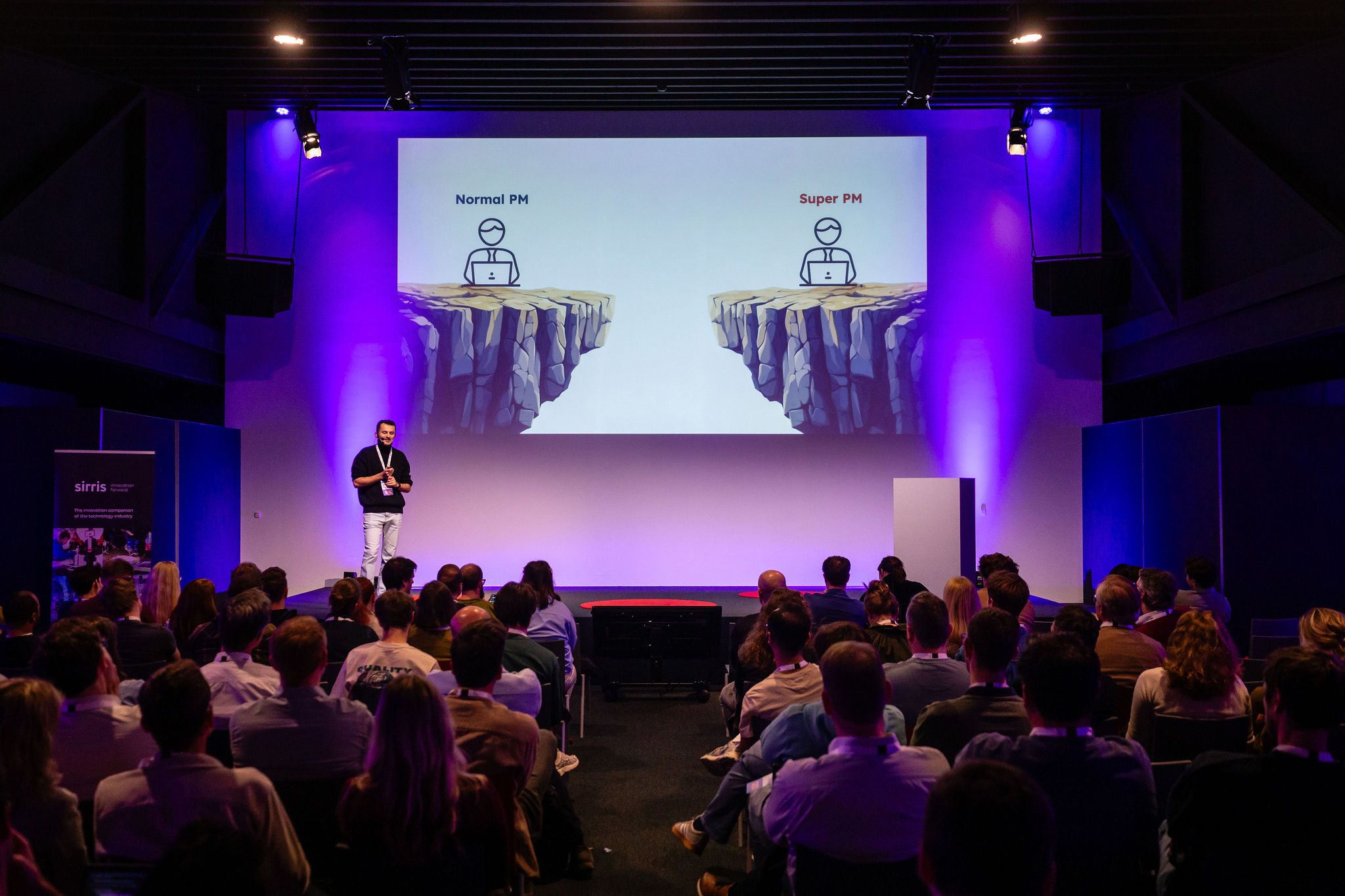
The PM’s role is therefore becoming broader and more strategic, and this shift towards working at a higher level of abstraction is visible in day-to-day practice:
- From manual documentation → to AI-driven content generation
- From briefing UX/design → to building prompt-based prototypes
- From coordinating across silos → to overlapping roles with direct implementation
What are the super PM’s defining features?
AI generates. But only a good PM can decide what’s of value,’ says Koen Boncquet.
According to him, these are the three AI-resistant skills for the PM of tomorrow (or even today):
- Judgement: the ability to make decisions, set priorities and evaluate AI output critically
- Product taste: the sense of creativity, quality and user experience, which is largely instinctive
- Specific domain knowledge: market and customer knowledge built up through years of experience, it is harder to replace and essential for effective prompts
Why junior Product Managers have a strategic advantage
While experience and domain knowledge are and will remain important, Boncquet strongly believes in the potential of young Product Managers. Many experienced PMs still use AI to replace existing work flows (e.g. search), but juniors are building new, AI-driven work flows:
'They are AI natives and use tools in a fundamentally different way. They delegate to multiple AI agents simultaneously and combine the output. That’s a new way of thinking.’
His advice? Make the most of this advantage and systematically build domain knowledge at the same time.
The value of community: Product Day as a catalyst
Finally, Koen Boncquet stresses how important the product community has become:
‘What struck me most about Product Day is how much the product community has grown. Ten years ago, it scarcely existed in Belgium. Today, hundreds of PMs share insights and experiences, and their baseline knowledge has increased enormously. It’s great to be part of that.’
Strengthen your role as a Product Manager in the AI age
AI is changing your work, but tools alone aren’t enough. It’s your judgement, creativity and experience that make the difference.