Optical 3D Feature Recognition using Minimal Data
Photometric stereo makes small irregularities visible for robotic picking
Imagine you need a robot arm to reliably grasp a wooden component with pronounced grain and texture. Choosing AI-based computer vision often seems like the obvious solution nowadays. But it is not always the best choice. AI must be trained repeatedly using large amounts of data, and it does not always deliver robust results when there are variations in material, lighting, or product type.
That’s why Sirris has developed, as part of the Viral project a reliable alternative without AI: photometric stereo. This optical method uses controlled light to detect even small marks. This allows you to work quickly and easily, in a way that is integrated into your existing production lines.
Why does wood pose a challenge for detection?
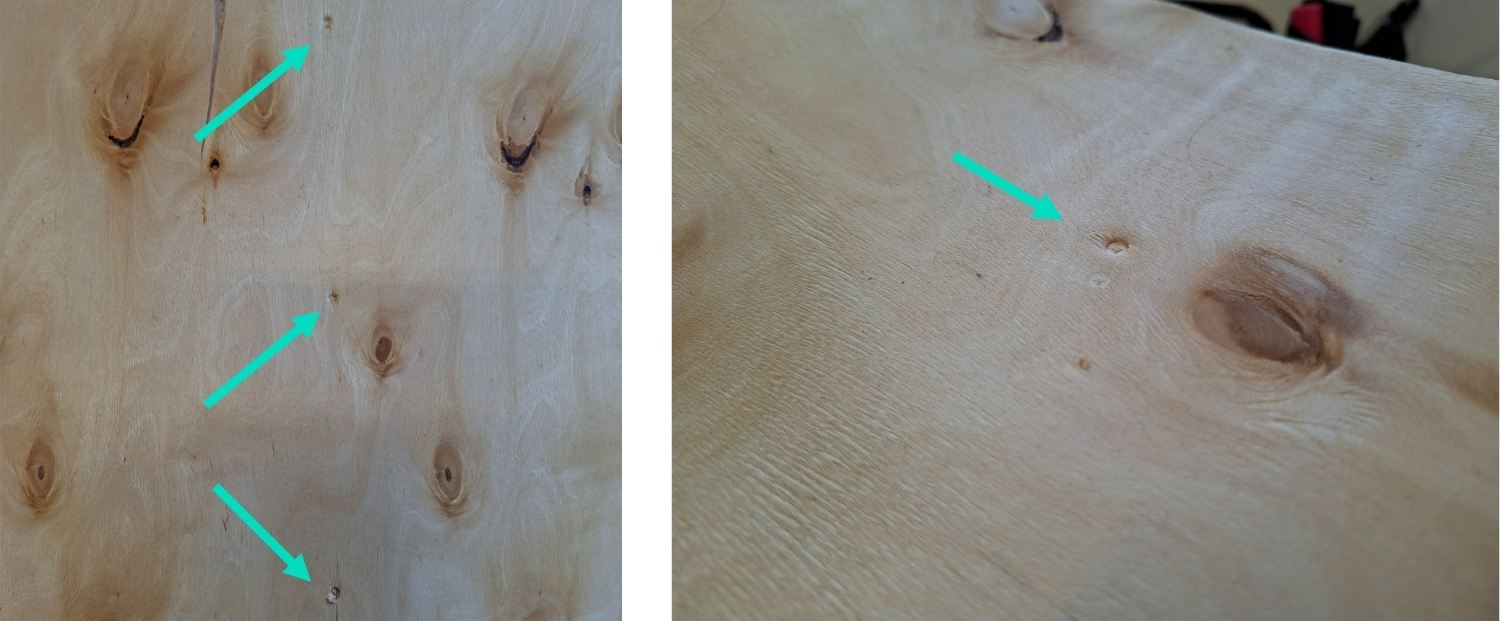
The precise position and orientation of an object can be accurately determined by making small, detectable indentations in a wooden surface. And that is essential for a secure grip. But to an ordinary camera, the rich texture of the wood, with its natural grain, looks just like the indentations. This confuses standard contrast-based methods and makes them less reliable.
Light as a measuring instrument
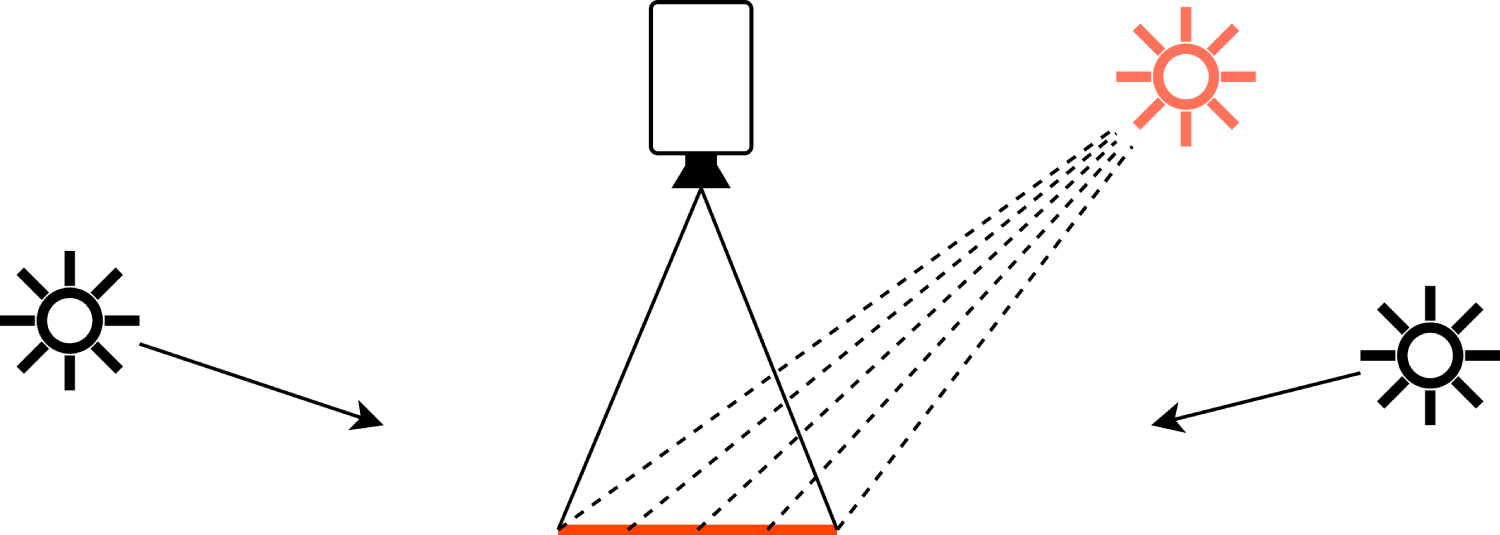
So how does photometric stereo make a difference? First, we take several photographs of the same wooden surface from different lighting angles, precisely determined using a number of spherical mirrors. The reflection on each mirror shows the direction from which the light reaches the camera.
Since matt surfaces reflect light in a particular way – with untreated wood being almost perfectly matt – we can calculate the slope and the elevation profile. The subtle indentations, which in ordinary images are completely lost in the texture of the wood, thus become visible.
Reliable results even in well-lit environments
But what about ambient light? After all, you can’t always work in a dark test chamber. Using a reference image against which the current image is compared, the method remains stable even in a well-lit environment. Without making any major changes to the setup.
Advantages of photometric stereo
- Deterministic and explainable: no AI, so no training data required either
- Very fast: the calculation comes down to solving a linear system (< 0.5 s).
- Fully automatic: ready for use after a single, detailed calibration
- Easy to integrate: suitable for use in an existing illuminated production environment
Tested and approved: five indentations recognised without fail
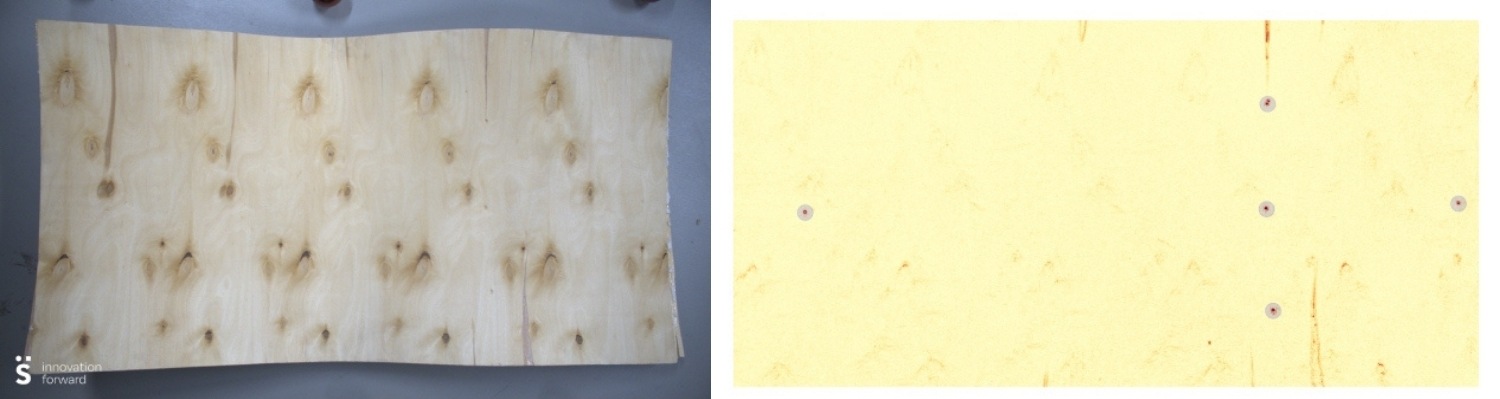
In a test setup, Sirris scanned a wooden component with five indentations.
Thanks to the calculated curvature of the surface, all five points were clearly visible and correctly detected. Based on those positions, the robot was able to grasp objects consistently and reliably.
A similar approach for your production environment?
Interested in a demonstration or feasibility analysis for your company? Our Vision Edge & AI Lab team will gladly explore the possibilities together with you.
Discover the VIRAL project on smart robotics and machine vision
This photometric stereo application is part of the VIRAL project. In this project, Sirris helps companies explore the possibilities of machine vision, smart robotics and advanced image processing for flexible production environments.