

Adtractive | Additive & Subtractive manufacturing

Improving precision in metal additive manufacturing with a hybrid laser process
Metal additive manufacturing offers strong innovation potential. However, in some cases, it remains limited by the surface quality and accuracy of the produced parts. The Adtractive project explores a new approach to overcome these limitations. It combines additive manufacturing with a subtractive process by integrating an ablative laser directly into the additive machine. This hybridisation makes it possible to improve part quality during the manufacturing process, without additional steps.
Target group
The project is primarily relevant for:
- Companies using metal additive manufacturing
- Industries producing complex or high-value parts
- Sectors such as aerospace, energy and advanced mechanics (e.g. heat exchangers, damping structures, local heat treatment)
- R&D centres and engineering offices
- Industry 4.0 solution integrators
Context
Metal additive manufacturing still faces limitations, particularly in terms of precision and surface quality. Post-processing operations are often required, increasing both costs and lead times.
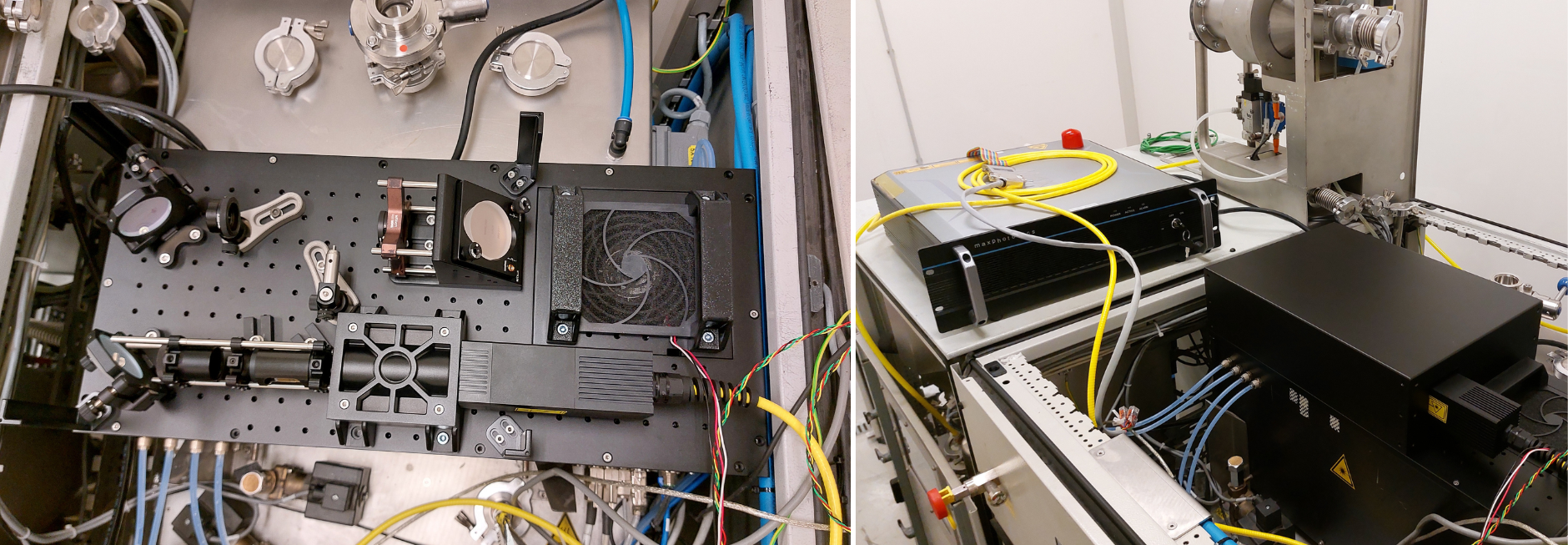
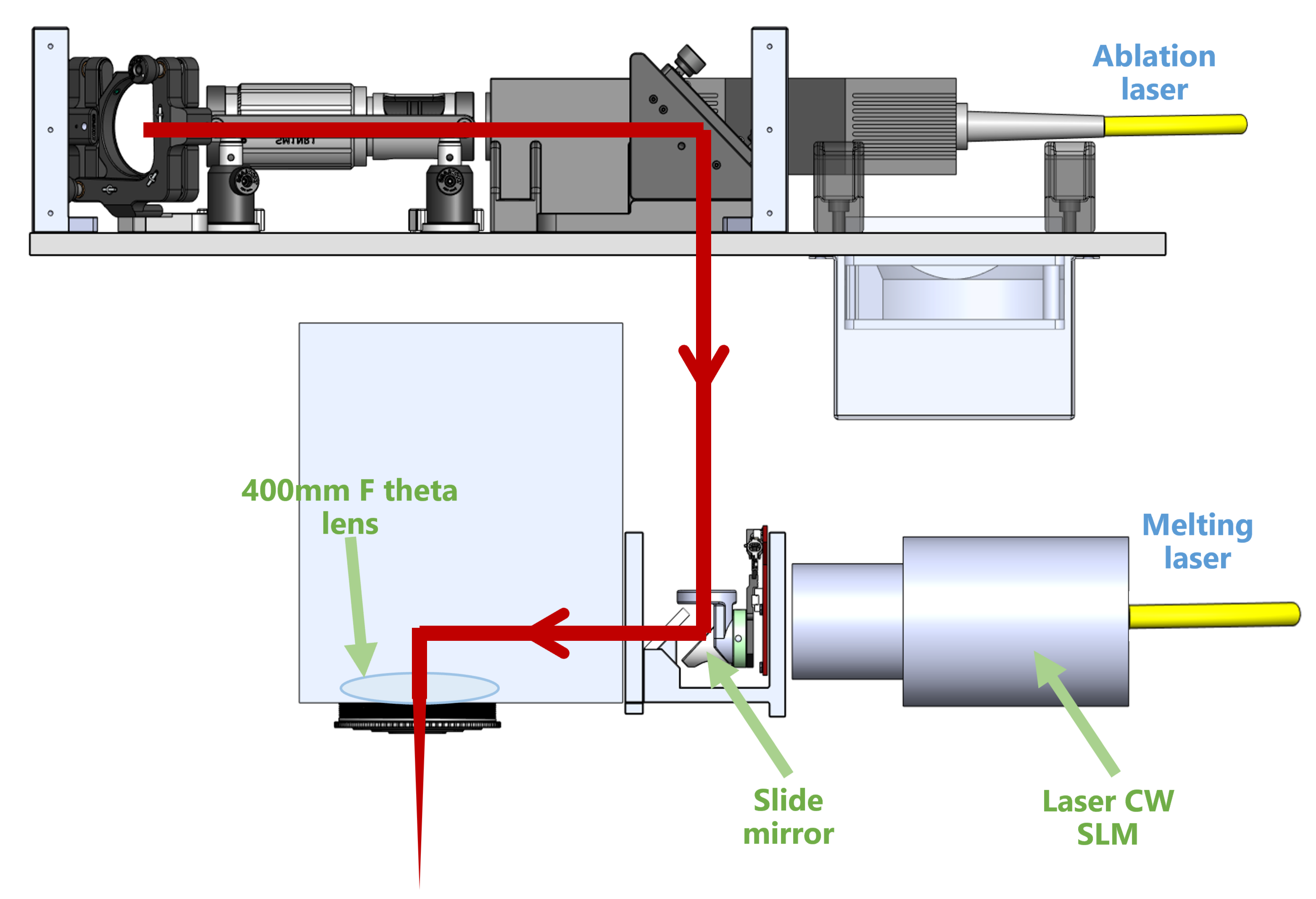
The Adtractive project aims to address these limitations by developing a hybrid system combining additive manufacturing and laser ablation within a single machine. This approach aims to improve part quality, material usage and process flexibility, especially for complex geometries or larger volumes.
Positioned at the intersection of additive manufacturing and artificial intelligence, the project fits within an Industry 4.0 framework. Algorithms optimise the distribution of operations between additive and subtractive processes.
Objectives & results
The project aims to demonstrate the feasibility and benefits of a hybrid platform combining additive manufacturing and laser ablation.
Project objectives
- Develop a platform integrating two lasers within a single system
- Combine additive manufacturing and ablation in real time
- Improve precision, level of detail and surface quality
- Reduce production time and material consumption
- Integrate predictive algorithms to optimise the process
Principaux résultats attendus :
- Development of a hybrid demonstrator combining material addition and removal
- Validation of an “additive manufacturing + laser finishing” method
- Production of parts with fine texturing, micro-details and improved surface quality
- Reduction of post-processing steps
- Quantification of gains in performance, cost and material efficiency
Approach
The project follows a five-step methodology:
- Definition of the demonstrator and industrial use cases
Technical specification of the SLM upgrade (integration of an ablative laser), hardware and software architecture, and selection of representative parts with the industrial committee - Development of artificial intelligence algorithms
Geometry analysis and automatic selection of the optimal combination between additive and subtractive processes based on time and material - Integration of the ablative laser
Selection of the laser, development of the optical module and integration into the additive machine - Process control and experimental validation
Parameter optimisation and performance characterisation on different geometries - Production of demonstrators
Manufacturing of functional parts, evaluation of gains under industrial conditions and operational validation of the hybrid platform
Would you like to propose a use case or follow the project’s progress?
This Win4Collective project is at a low technology readiness level and targets long-term valorisation. In this context, identifying concrete industrial use cases is essential to guide the next steps of the project.
Funding
- Funding agency: SPW Recherche
- Project type: Win4Collective
- Contract number: 2210085
- Total budget : € 631,720
- Funding level: 75 % subsidised
Partners

More information about our expertise
Our experts

Do you have a question?
Send it to innovation@sirris.be